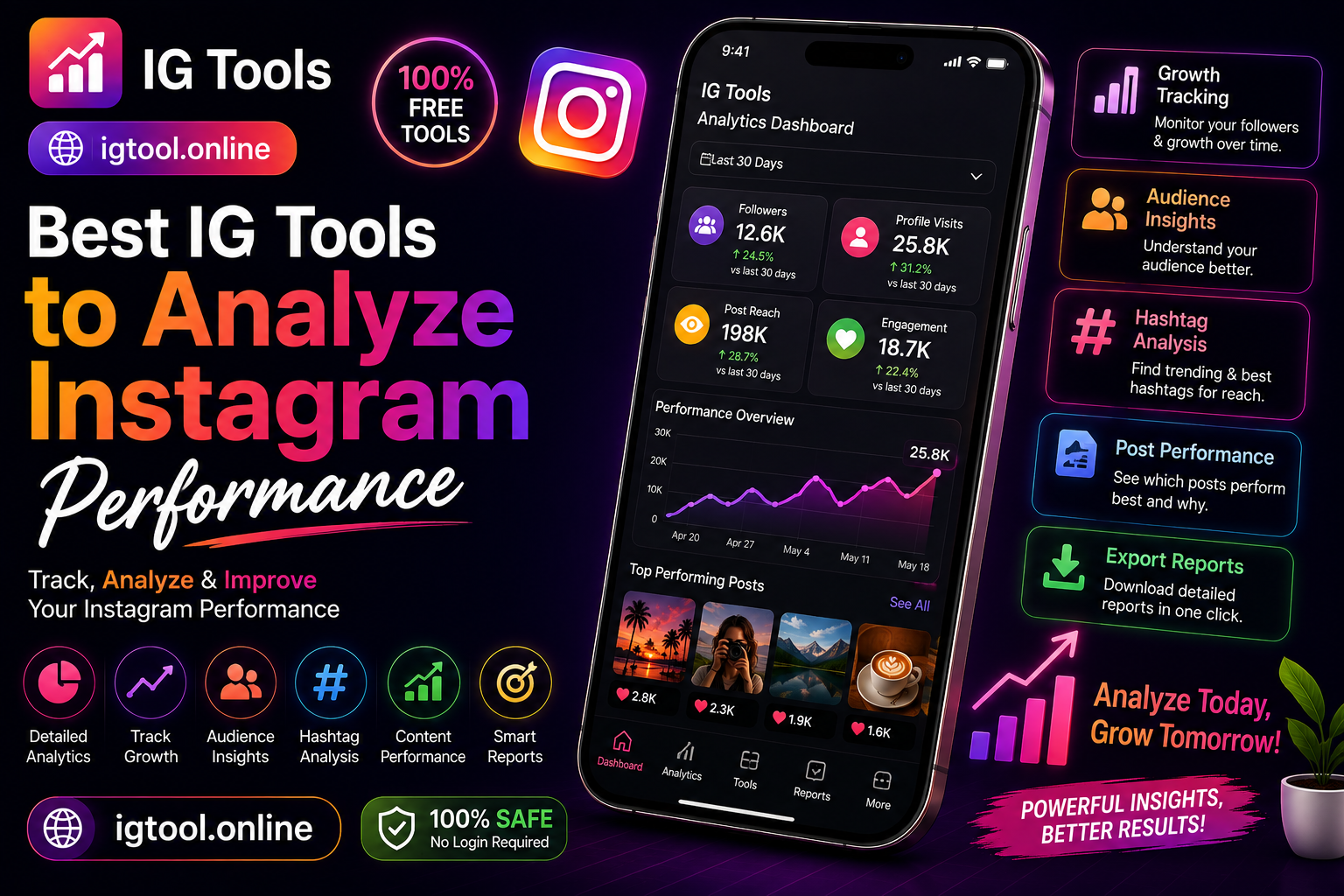
Best IG Tools to Analyze Instagram Performance
Understanding how your Instagram account is performing is essential if you want to grow consistently. Posting content without checking the results makes it difficult to know what your audience actually likes, which formats generate reach, and where your strategy needs improvement. This is why Instagram analytics and IG Tools can be valuable for creators, businesses, influencers, and marketers.
The right tools can help you track follower growth, engagement, reach, content performance, audience activity, and other important metrics. Instead of guessing what works, you can use real data to make better decisions and improve your Instagram strategy over time.
Why Instagram Performance Analysis Matters
Instagram performance is about more than the number of followers you have. A large audience does not necessarily mean that your content is successful.
You should also consider reach, views, likes, comments, shares, saves, profile visits, Story interactions, and other available metrics.
Performance analysis helps you understand which content attracts attention and which content encourages meaningful engagement. It can also reveal whether your audience is growing in the direction you want.
Instagram’s Built-In Insights
Before using third-party IG Tools, start with Instagram’s own analytics features. Built-in Insights can provide useful information about content performance and audience activity, depending on your account type and available features.
Review the performance of your posts, Reels, and Stories. Compare reach and engagement across different content formats.
This information provides a strong foundation for deciding which areas of your strategy need improvement.
Instagram Analytics Tools
Dedicated analytics IG Tools can organize performance information and make it easier to identify trends.
These tools may allow you to monitor follower growth, engagement rates, reach, content performance, and historical data.
The benefit is not simply having more numbers. The real value comes from using those numbers to make decisions.
For example, if your engagement consistently increases when you publish educational Reels, you may want to create more content around that format.
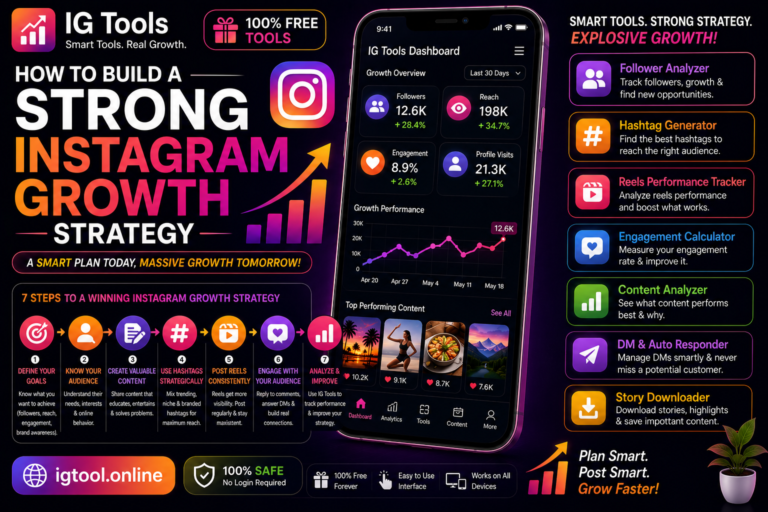
Track Follower Growth
Follower growth is one of the easiest metrics to understand, but it should be analyzed carefully.
Look at how quickly your follower count changes over time rather than focusing on a single day.
A sudden increase can be caused by a successful Reel, collaboration, mention, or other event. A decline may indicate changes in content performance or audience interest.
IG Tools can help you track these trends and identify possible connections between content and follower growth.
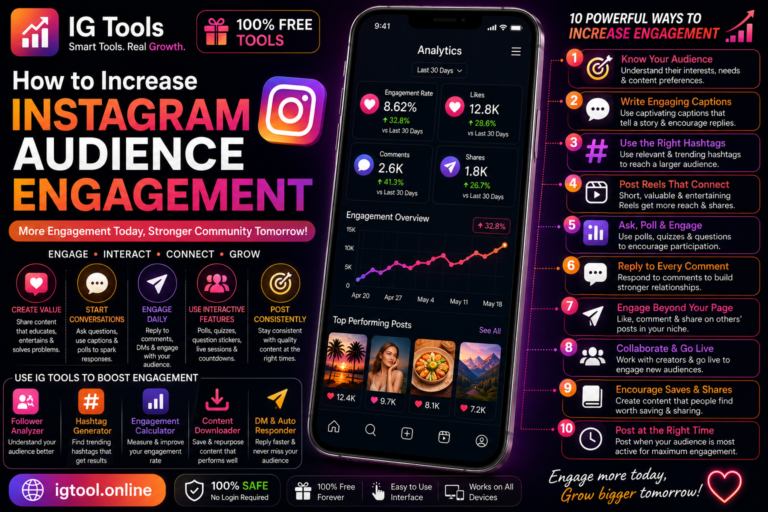
Monitor Engagement Rate
Engagement rate can help you understand how actively your audience interacts with your content.
Consider likes, comments, shares, saves, and other relevant interactions alongside reach or followers.
Do not compare your account with another account without considering differences in niche, audience, content type, and size.
Instead, use engagement data primarily to understand your own progress.
Analyze Reach and Impressions
Reach shows how many unique accounts saw your content, while impressions generally represent the number of times content was displayed.
These metrics can help you determine whether your content is being discovered by new people.
If reach is increasing but engagement remains low, you may need to improve content relevance. If engagement is strong but reach is limited, you may need to focus more on discoverability.
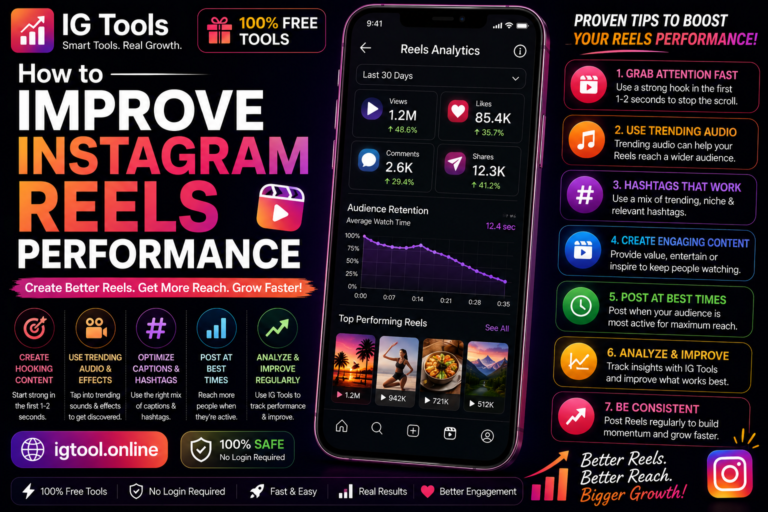
Study Reel Performance
Reels can play a major role in Instagram growth, so analyze them separately.
Track views, reach, shares, saves, comments, profile visits, and follower growth generated by your videos.
Look for patterns among your best-performing Reels. Consider their topic, hook, format, length, visual style, and storytelling approach.
Use those patterns to develop future ideas without simply copying successful videos.
Analyze Instagram Stories
Stories can provide valuable information about your existing audience.
Monitor views, replies, sticker interactions, and other available metrics. Pay attention to whether viewers continue watching through a sequence or leave early.
If certain topics consistently generate more responses, create more Stories around those themes.
Story analytics can also help you determine which types of interactive content your audience prefers.
Analyze Your Best Content
Your highest-performing content can provide a roadmap for future growth.
Create a list of your strongest posts and compare their characteristics. Look for common topics, formats, hooks, captions, and visual styles.
You may discover that your audience responds strongly to educational content, while promotional posts receive less interaction.
Use these findings to improve your content mix.
Use Competitor Analysis Carefully
Competitor analysis can provide additional context about your niche.
Some IG Tools allow you to track publicly available information about other accounts, such as posting frequency, engagement patterns, and content topics.
Use competitor research to identify trends and opportunities rather than copying other creators.
Your advantage comes from developing your own content style and offering something useful to your target audience.
Analyze Audience Activity
Understanding when your audience is active can help you test different publishing times.
Use available audience insights or IG Tools to identify potential activity patterns.
However, do not assume that a recommended time will automatically produce better results. Test different times and compare your actual performance.
Your own data is usually more useful than generic posting-time advice.
Track Profile Visits
Profile visits can show whether your content encourages people to learn more about your account.
If a Reel receives many views but very few profile visits, you may need stronger calls to action or more relevant content.
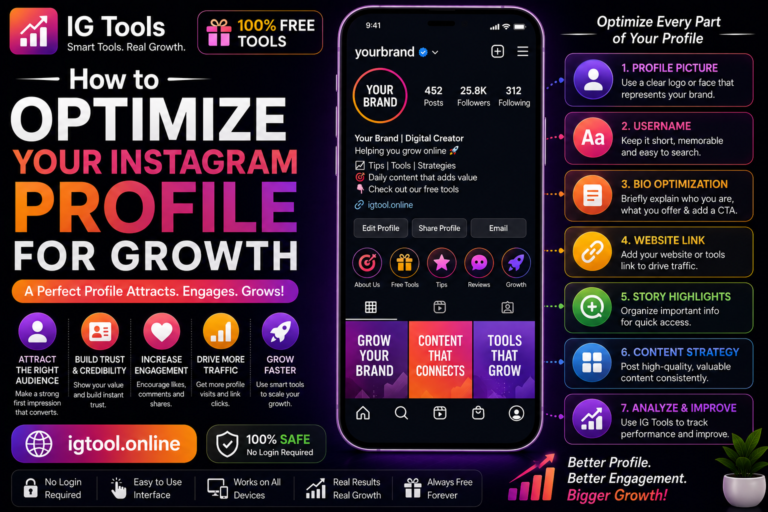
If profile visits are high but follower growth is low, your profile may need optimization.
These metrics should be considered together rather than separately.
Monitor Shares and Saves
Shares and saves can provide useful information about content value.
A high number of shares may indicate that your content is relatable or useful enough for people to send to others.
Saves can indicate that people want to return to your content later.
Create more educational, practical, or reference-style content if these interactions consistently perform well for your niche.
Choose IG Tools Based on Your Goals
Not every analytics tool is necessary for every account.
If you are a beginner, Instagram’s built-in analytics may be enough. If you manage multiple accounts or need more detailed reporting, advanced analytics IG Tools may be useful.
Choose tools based on specific needs such as reporting, competitor research, historical tracking, content analysis, or audience insights.
Avoid paying for features you will not use.
Turn Data Into Action
Analytics only become valuable when you use them to improve your strategy.
After reviewing your data, ask simple questions. Which topics perform best? Which content formats generate the most reach? What creates the most saves or shares? Which posts lead to profile visits and followers?
Use your answers to plan your next content cycle.
Do not change everything at once. Test specific improvements so you can understand what makes a difference.
Avoid Vanity Metrics
Some metrics can look impressive without providing much business or audience value.
For example, a high view count does not necessarily mean that the viewers are interested in your niche.
Focus on meaningful indicators such as relevant follower growth, engagement, shares, saves, profile visits, leads, or conversions, depending on your goals.
Your analytics strategy should reflect what success means for your account.
Avoid Artificial Growth Data
Buying followers, views, or engagement can make your analytics unreliable.
If a large percentage of your audience is inactive or artificial, it becomes harder to understand what real followers actually want.
Use genuine data to evaluate your performance and avoid services that manipulate engagement numbers.
Create a Weekly Instagram Review
You do not need to analyze your account constantly. A weekly or monthly review can be enough for many creators and businesses.
Review your strongest and weakest content, follower growth, reach, engagement, and other important metrics.
Write down a few observations and use them to guide your next content plan.
This creates a simple process of continuous improvement.
Final Thoughts
The best IG Tools for analyzing Instagram performance are those that help you turn data into better decisions. Analytics can reveal which content reaches your audience, what encourages engagement, and which strategies contribute to follower growth.
Start with Instagram’s built-in Insights and add third-party tools when you need more advanced features. Track meaningful metrics such as reach, engagement, shares, saves, profile visits, and follower growth.
Most importantly, do not collect data without using it. Analyze your results, identify patterns, test new ideas, and continuously improve your content. With a data-driven approach and the right IG Tools, you can build a stronger Instagram strategy and make more informed growth decisions.